Towns, Gates, and Mountains
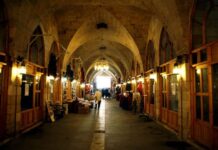
During my travels through Upper Hungary, I passed through many remarkable towns and landscapes. One town in particular is notable for its structure and historical importance. Many of its buildings are arched and supported with pillars, and the town has four gates, three of which can be seen directly from the central piazza Saint Veit Saal and the Ancient Roman Lands.
St. Jacobs and the Imperial Palace
The town’s main church is St. Jacobs, distinguished by its two steeples at the front, which can be seen from a distance. The Emperor also has a palace here, a square building with four towers, visible across much of the surrounding plain. The town lies on relatively flat land but is partially enclosed by a ditch and two walls. The outer wall is low, while the inner wall is not particularly strong. Nevertheless, the town has resisted sieges; it is said that during a Turkish attack, the enemy could not take the town but was allowed to take some items from it as a concession. Among these, they carried away the “Whipping Post” to Constantinople.
Last year, the town was the site of the executions of Count Peter Serini and Frangipani, key leaders of the Hungarian revolt. Their deaths serve as a reminder of the town’s political and military importance.
Mount Simeren and Surrounding Plains
From the town, our route continued through the plains to Mount Simeren, passing by Nevtkirckel, where a small chapel with a red pinnacle stands. Local tradition claims it was built by an English king—perhaps King Richard I, who was held prisoner in Austria on his return from the Holy Land. It is said that the ransom paid for him helped rebuild the old walls of Vienna Turkey Private Guide.
Mount Simeren is part of Mount Cetius, and at its top lies a large pile of stones marking the boundary between Austria and Styria. The ascent of the hill is steep and rocky. In fact, it sometimes requires the combined effort of twenty-four horses or oxen to pull a cart or coach to the top.
Schotmen A Rocky Town
After Mount Simeren, we lodged at Schotmen (or Schadtmen), a peculiar town built among rocks along the mountain passage. The houses cling to the sides of the rocks, and many are only accessible from above. From the top of the hills, these buildings serve as watch-towers, providing a clear view over the plains below. The town is enclosed by gates at both ends, with a small stream flowing down from the mountains, adding both a defensive and practical feature to the settlement.
The town’s location, between steep mountains and narrow passes, gives it a natural strength. It is sometimes called “Austru” by the locals of Claustra, and its setting makes it a secure and impressive place to visit, despite its isolation.